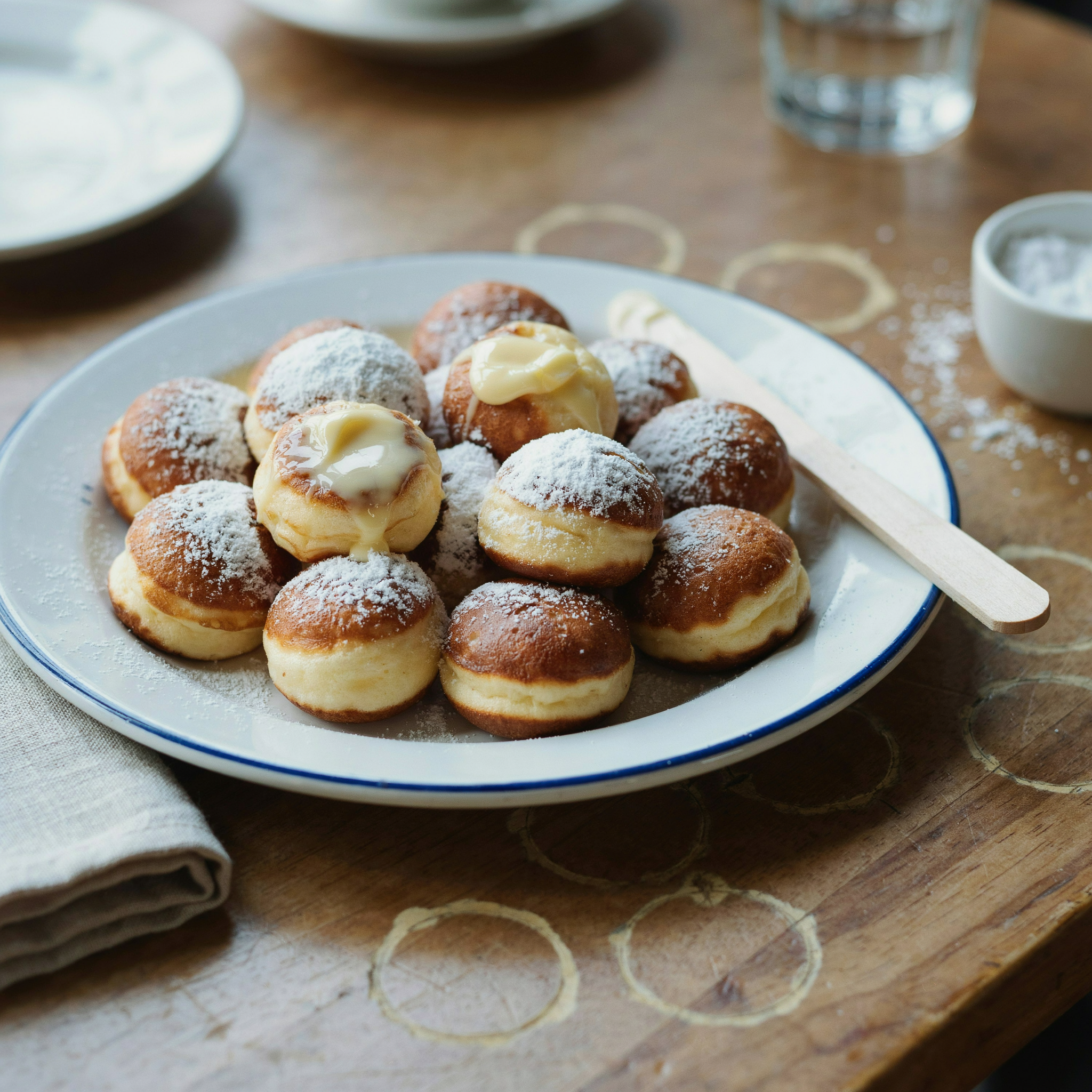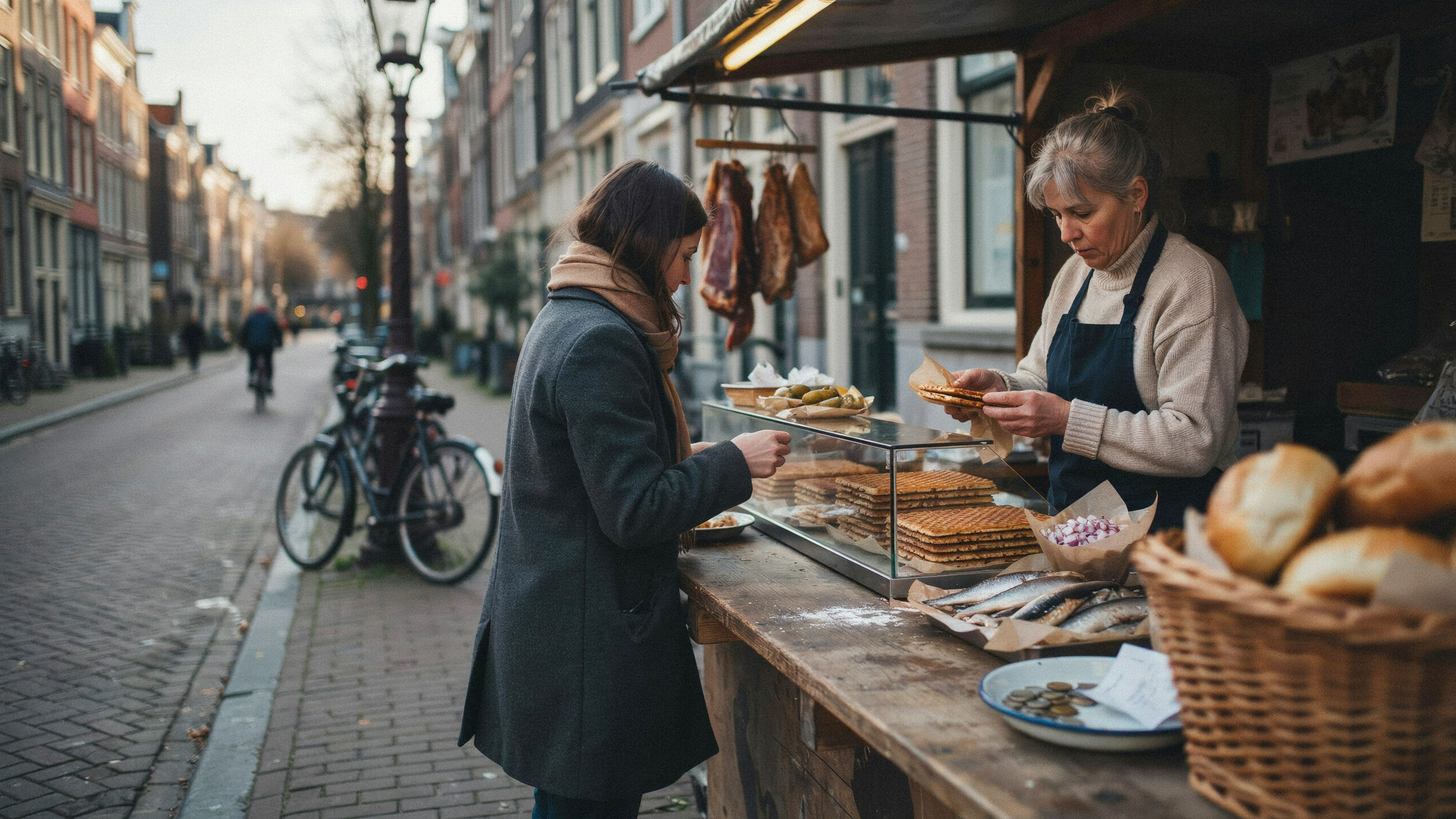
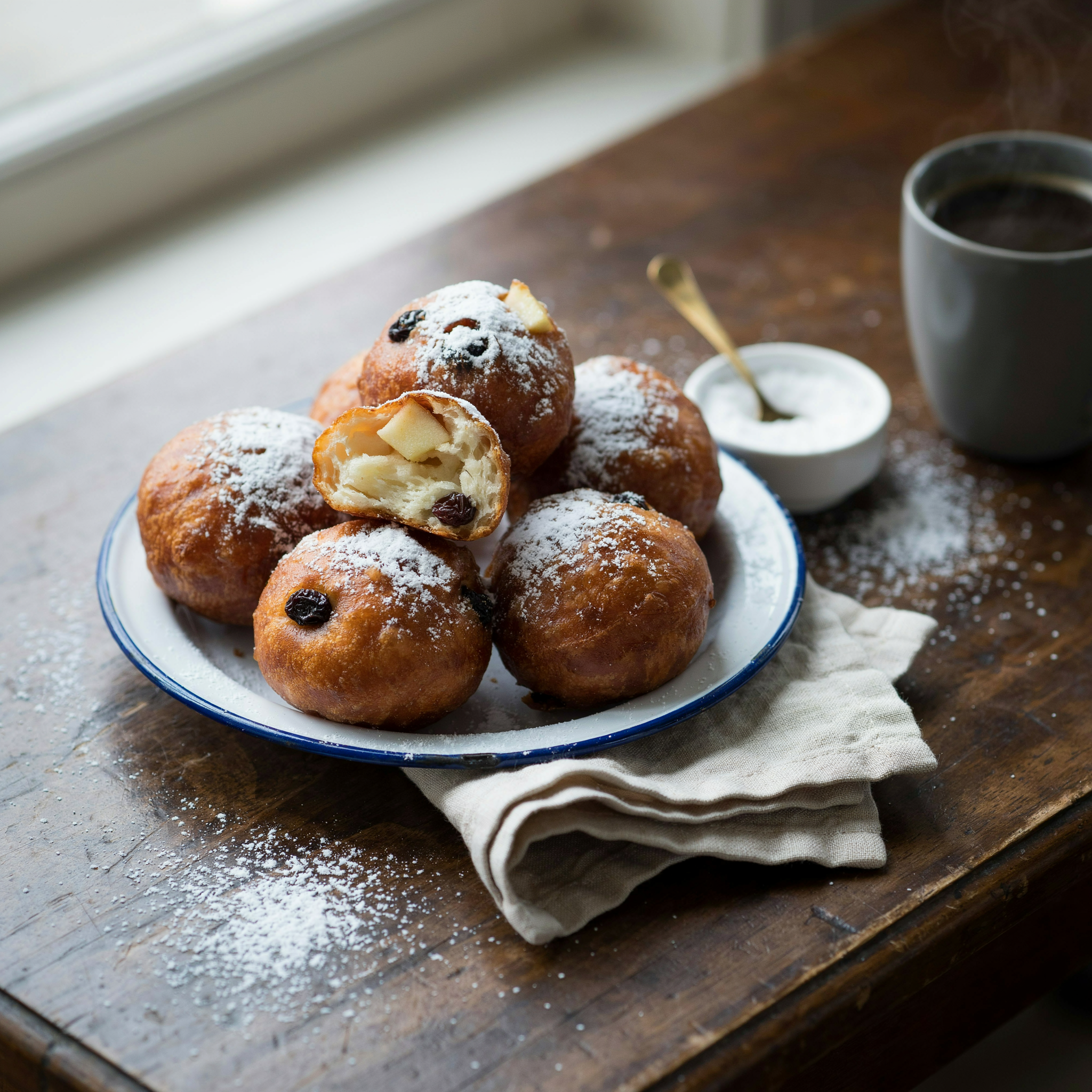
Oliebollen are Dutch balls of yeast-raised dough deep-fried until the outside is crisp and the center is soft and airy. The batter commonly includes flour, yeast, milk and egg, with raisins or currants often folded through it; some versions add apple or other seasonal touches. They are finished with a generous dusting of powdered sugar. Freshly fried oliebollen have a warm, slightly chewy interior and a browned edge that is more substantial than a light cake doughnut. In Amsterdam and across the Netherlands, oliebollen are strongly tied to the final days of the year. Temporary stalls, bakeries and market counters sell them as people prepare for New Year's Eve, when the pastries are eaten at home or shared with visitors. They are not an Amsterdam invention, but the city is an easy place to encounter the national seasonal custom. For travelers, the appeal is as much the timing and setting as the pastry itself: queue at a winter stall, eat one warm and compare a plain version with one containing dried fruit.
- Iconic
- Street food
- Vegetarian
- Sweet
€1.20–€2.50 approx.
0votes — sign in to vote